
Last updated: 15 October 2026
Upbeat Restoration handles crawlspace encapsulation for homes in Sandy Springs, Georgia: a sealed ground cover and wall liner that keeps damp soil from feeding moisture into the space under the floors. A crawl space that smells musty, shows stained joists or sits over bare wet dirt is a good candidate. The crew is on call around the clock at (404) 495-3899, and the on-site estimate is free.
What’s included in your crawlspace encapsulation
- A look at the soil, joists, subfloor and foundation walls to find where the moisture comes from
- Clearing loose debris and old, failed or torn plastic from the ground
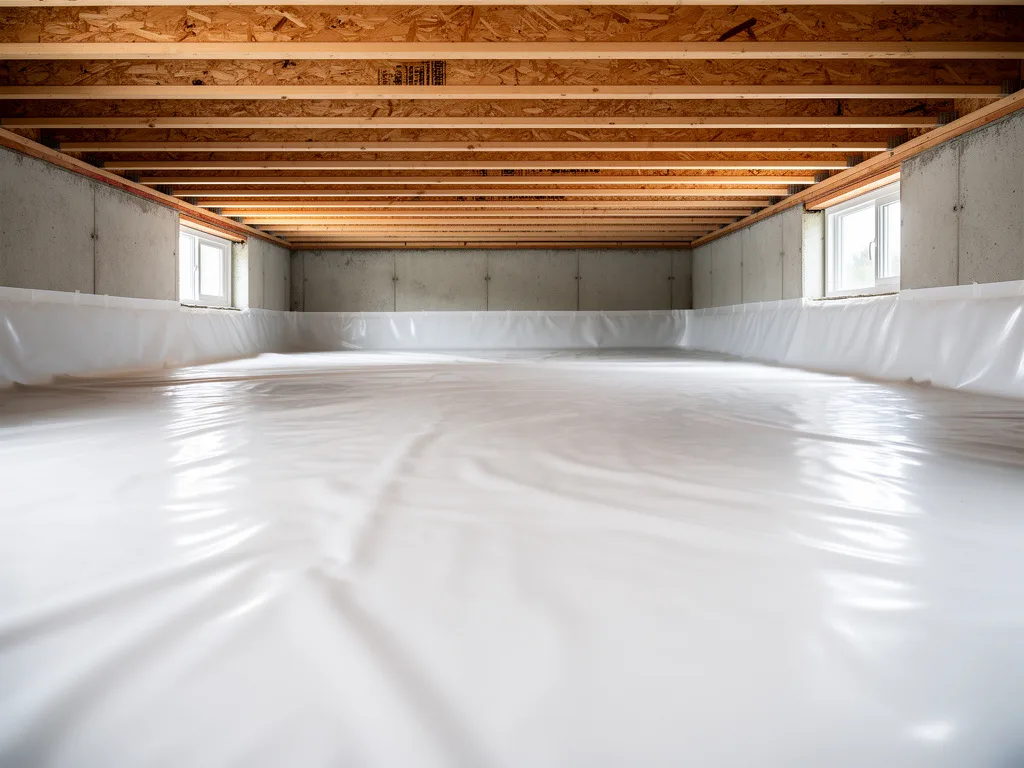
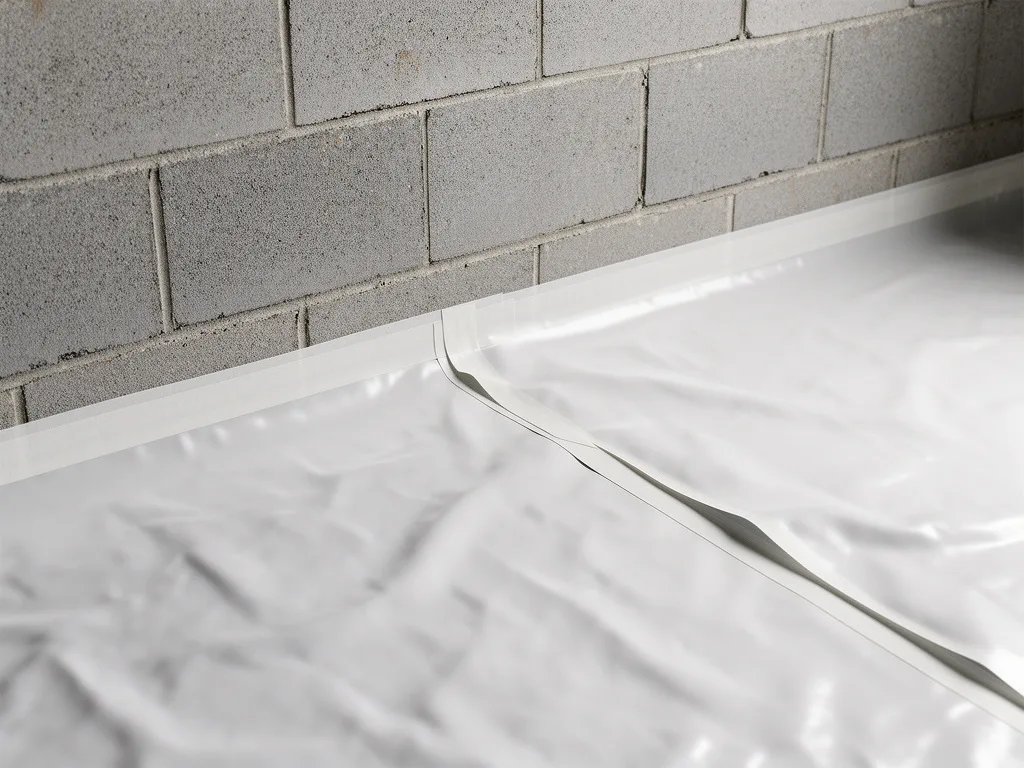
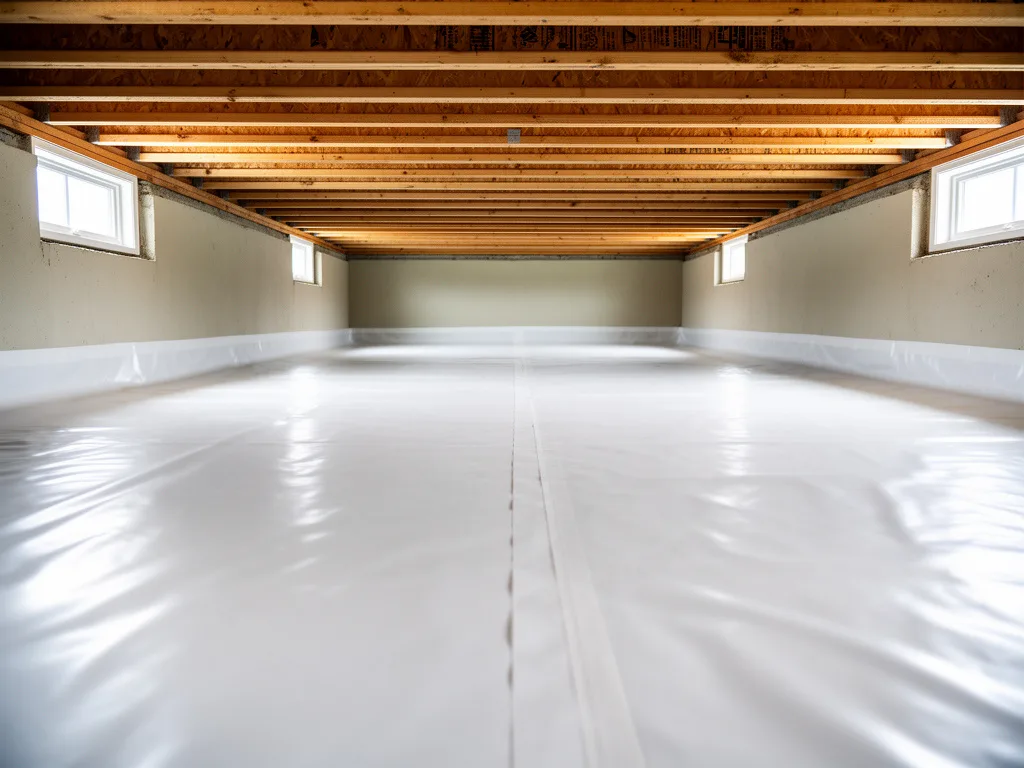
- A heavy ground cover laid over the whole floor of the space, with seams overlapped and taped
- The same liner carried up the foundation walls and sealed at the top and around piers
- Sealing of gaps and vents that let outside air and humidity in
- Drainage fixes or a sump where standing water collects
- A dehumidifier sized for the space, when the estimate calls for one
- Photos and notes of the condition found, useful if an insurer asks
The idea is simple: the ground becomes a sealed surface instead of an open source of vapor. For background on the space itself, see the Wikipedia article on the crawl space and how it is built.
Why damp soil and stained joists show up in a humid climate
Sandy Springs has a humid subtropical climate and gets about 51.82 inches of rain a year, with March the wettest month at 5.52 inches. Water soaks into the soil around a house, and moisture then rises as vapor from bare ground into the crawl space. Warm, muggy air drifting in through vents meets cooler framing and condenses on it.
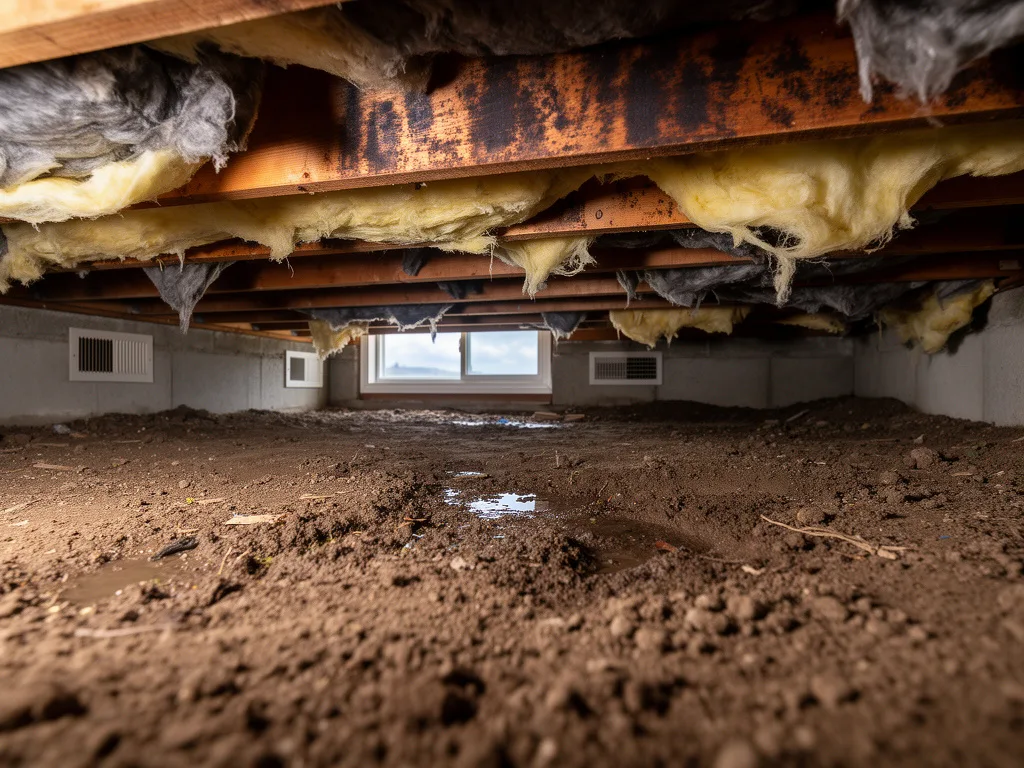
Over a few seasons the signs pile up. Joists darken, insulation sags, metal rusts and the ground looks wet or crusted. Open vents do not cure this in a place this humid; they often bring in more moisture than they carry out.
Questions about your specific surface or budget? Call (404) 495-3899 — no obligation.
Musty smells and soft floors: how they link to the space below
People often ask why a house smells musty when the living area looks clean. Air moves up from a crawl space through gaps around pipes, ducts and the floor edges, so a damp space below can flavor the rooms above. Floors can also react. Hardwood may cup or buckle, and a subfloor can feel soft near a plumbing wall.
A smell is a clue, not a diagnosis. The estimate visit looks at the cause: a leak, poor drainage, humid air or all three. If a pipe is leaking, that gets fixed first, because sealing a ground cover over an active leak solves nothing.
Encapsulation compared with basement waterproofing and mold cleanup
Encapsulation is not the same as waterproofing a basement. Basement waterproofing deals with liquid water pushing through walls and slabs, often with drains and pumps. Encapsulation controls vapor and humidity in a low space by sealing the ground and walls.
It also differs from cleanup of existing growth. If the joists already carry mold, that needs removal before anything is sealed over it; see the mold remediation page for how that work goes. Sealing comes second, so the cause does not bring the problem back.
Not sure which option fits your situation? Call (404) 495-3899 and talk it through with a contractor.
Homes from the early boom years
Much of Sandy Springs grew in a housing boom that followed the building of GA 400 and I-285 in the early 1960s. A home from those years may have an older crawl space, so its vents, ground cover and any plastic are worth checking. Age alone does not mean a problem, but those details are worth a close look at the estimate visit.
What the estimate visit checks
The visit is free and happens on site. The technician checks the ground, the height of the space, the condition of the joists and subfloor, signs of past water, vents, ducts and pipes, and the way water drains away from the house. The result is a written scope of what the job would involve. Homeowners dealing with an insurance claim can ask the team to document the damage found, though the insurer alone decides what a claim covers.
Still weighing your options? Call (404) 495-3899 for a straight answer.
How a crawl space gets sealed, step by step
Clearing and fixing the cause
The crew removes debris and old plastic, then deals with leaks, drainage or damaged framing. The space has to be dry enough and clear enough to seal properly.
Laying the ground cover
A heavy sheet covers the soil from wall to wall. Seams overlap and are taped so there is no bare patch left for vapor to rise through.
Lining the foundation walls
The liner runs up the walls and is fastened and sealed at the top. Piers and pipe penetrations are cut around and taped tight.
Controlling the air and checking the result
Vents and gaps are sealed, and a dehumidifier is added when the space needs one. The crew then walks the finished space and notes the condition for the homeowner.
Questions about a damp crawl space can go straight to (404) 495-3899.
Neighboring problems that share a cause
Crawlspace encapsulation across the wider area
The team works in Sandy Springs. If you are unsure whether your address is covered, call (404) 495-3899 or visit the contact page.
Ready for a practical answer? Call (404) 495-3899 to discuss your project.
Crawlspace Encapsulation: before and after
Crawlspace Encapsulation Sandy Springs: before you book
Why does my house smell musty when the crawl space is the only damp part?
Air rises from a crawl space through gaps around pipes, ducts and floor edges. A damp space below can carry its smell into the rooms above. The estimate visit looks for the source, such as a leak, poor drainage or humid air.
How bad is a musty-smelling crawlspace?
A smell alone does not show how bad it is. Stained joists, wet soil, sagging insulation or visible growth point to a larger problem. An on-site look is the way to tell, and the estimate is free.
Can crawl space moisture make hardwood floors buckle?
Yes, moisture from below can make hardwood cup or buckle. The floor reacts to humidity in the space under it. Finding and controlling that moisture is part of the estimate visit.
Is encapsulation the same as waterproofing a basement?
No. Basement waterproofing manages liquid water coming through walls and slabs. Encapsulation seals the ground and walls of a crawl space to control vapor and humidity.